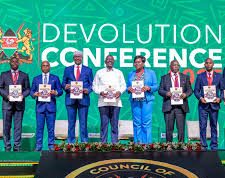





When Kenyans overwhelmingly endorsed the 2010 Constitution, devolution was sold as a cure for decades of centralised abuse, marginalisation, and unaccountable power. Power, resources, and decision-making would move closer to the people. County governments would be more responsive, more transparent, and more accountable. Fifteen years later, an uncomfortable question persists in public discourse: did we devolve development—or did we simply decentralise corruption?
This is not a rhetorical provocation. It is a question grounded in lived experience across many counties.
The Promise of Devolution
At its core, devolution was meant to achieve three things:
-
Equitable development by correcting historical regional imbalances
-
Improved service delivery through local decision-making
-
Enhanced accountability by bringing leadership closer to citizens
On paper, the logic was sound. Citizens would know their governors, MCAs, and county officials personally. Oversight would be easier. Misuse of funds would be visible and punishable at the ballot.
The reality, however, has proven far more complex.
Corruption Did Not Disappear—It Relocated
Corruption did not originate with devolution, and it certainly did not end with it. What has changed is its geography.
Instead of mega-scandals concentrated in national ministries, we now witness:
-
Inflated county tenders
-
Ghost projects at ward level
-
Procurement cartels embedded in county departments
-
Payrolls bloated with political loyalists and relatives
-
Development budgets consumed by “consultancies” and allowances
In many counties, corruption is no longer distant or abstract. It is local, familiar, and in some cases, socially negotiated.
Governors as Mini-Presidents
One of the unintended consequences of devolution has been the rise of governors as near-untouchable political figures.
With control over:
-
Multi-billion-shilling budgets
-
Appointments
-
Tenders
-
Local political structures
some governors have accumulated power with fewer effective checks than those faced by national executives.
County assemblies, constitutionally designed as oversight bodies, have often failed to play this role effectively. In some cases, they have been:
-
Captured through patronage
-
Silenced through intimidation
-
Neutralised through impeachment threats or financial inducements
Oversight becomes transactional rather than principled.
Oversight Without Teeth
Institutions meant to safeguard public resources—Auditor-General, Ethics and Anti-Corruption Commission, Senate—have consistently raised red flags on county finances. Audit reports detailing irregular expenditure, unsupported payments, and outright theft are published annually.
Yet consequences remain rare.
Why?
-
Investigations are slow
-
Prosecutions drag for years
-
Political alliances shield suspects
-
Citizens rarely sustain pressure beyond social media outrage
Corruption thrives not just where laws are weak, but where enforcement is selective and public fatigue sets in.
The Normalisation of Theft
Perhaps the most dangerous development is not corruption itself, but its normalisation.
In some communities:
-
A corrupt leader is tolerated if “something reaches the ground”
-
Theft is excused as long as roads are graded or bursaries issued
-
Accountability is viewed as political witch-hunting
This moral compromise undermines the very logic of devolution. When citizens lower standards in exchange for crumbs, theft becomes institutionalised.
Is Devolution the Problem?
It would be dishonest—and dangerous—to conclude that devolution itself is the problem.
Devolution has:
-
Expanded access to health services
-
Improved rural infrastructure in some regions
-
Created political space for previously marginalised voices
The issue is not devolution as a system, but devolution without accountability.
A decentralised system without strong civic vigilance simply decentralises abuse.
What Must Change
If devolution is to fulfil its promise, several shifts are necessary:
-
Strengthening County Assemblies
MCAs must be empowered—and pressured—to prioritise oversight over personal gain. -
Citizen-Led Accountability
Public participation must move beyond rituals to sustained monitoring of budgets and projects. -
Real Consequences for Theft
Prosecutions must be timely, visible, and politically neutral. -
Civic Education
Citizens must reject the logic that corruption is acceptable if benefits trickle down.
A Question of Will
Devolution did not decentralise theft by design. It revealed a deeper national challenge: weak accountability culture combined with strong political patronage.
The question, therefore, is not whether devolution has failed—but whether Kenyans are willing to defend it from capture.
Devolution can still be the most transformative governance reform Kenya has ever implemented. But only if citizens insist that bringing power closer to the people also brings honesty, transparency, and consequences closer as well.