






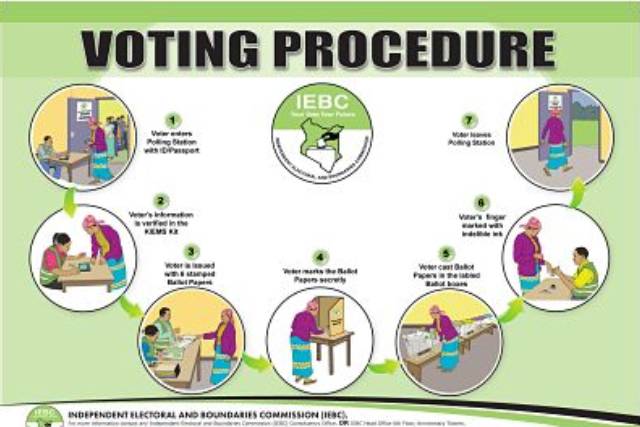
In Kenya, the ballot is treated as both a sacred ritual and a silver bullet. Every five years, citizens are summoned to believe that change begins and ends at the polling station. Campaign slogans promise renewal, manifestos pledge transformation, and voters are assured that the simple act of choosing leaders will reset a deeply flawed system. Yet, election after election, the same frustrations resurface: recycled leadership, persistent corruption, weak accountability, and growing public cynicism. This raises a difficult but necessary question—can leadership renewal truly be achieved through the ballot alone?
At its core, the ballot is a mechanism of selection, not transformation. It allows citizens to choose among available options, but it does not determine the quality of those options. When political parties are weak, ideologically hollow, and controlled by entrenched elites, elections tend to reproduce the status quo. New faces may emerge, but old habits remain. Leadership renewal becomes cosmetic rather than substantive.
Kenya’s political landscape illustrates this limitation vividly. Political parties rarely function as institutions that nurture leadership, develop policy thinkers, or enforce ethical standards. Instead, they operate as temporary vehicles for electoral convenience. Aspiring leaders often migrate between parties with little ideological consequence, guided more by viability than values. In such an environment, the ballot offers choice without meaningful differentiation.
Moreover, elections are episodic, while leadership is continuous. Voting occurs on a single day, but governance unfolds daily. When citizens retreat into political silence between elections, leaders operate with minimal scrutiny. Accountability weakens, and power consolidates. Leadership renewal, therefore, cannot be sustained if civic engagement is reduced to casting a vote and waiting five years for another opportunity.
The structure of political competition also constrains renewal. Campaign financing, patronage networks, and ethnic mobilization create high barriers for new entrants. Young leaders, reform-minded professionals, and grassroots voices often lack the resources or political protection required to compete effectively. The ballot may be open in theory, but in practice it favors those already embedded in the system. As a result, elections reward familiarity over merit and loyalty over competence.
There is also a deeper cultural dimension. Kenyan politics has normalized the idea that leadership is something done to citizens, not with them. Voters are mobilized as numbers rather than engaged as participants in governance. This dynamic encourages dependency and erodes collective responsibility. When leadership is externalized in this way, renewal becomes an expectation placed on individuals rather than a shared societal project.
This is not to argue that elections are irrelevant. The ballot remains essential—it confers legitimacy, enables peaceful transitions, and provides a constitutional pathway for change. However, it is insufficient on its own. Leadership renewal requires an ecosystem that extends beyond election day.
Such an ecosystem includes strong civic institutions, active citizen oversight, independent media, and political parties that function year-round. It requires citizens who attend public participation forums, demand transparency, question budgets, and resist the temptation to outsource responsibility entirely to elected officials. It also demands a shift in how leadership is cultivated—from personality-driven politics to values-driven public service.
Renewal also begins long before the ballot. It starts in community organizations, professional spaces, youth movements, and civic education. When leadership development is treated as a continuous process rather than an electoral event, the pool of credible candidates expands. The ballot then becomes a tool for affirming renewal, not attempting to manufacture it.
Ultimately, the limits of the ballot are a reminder that democracy is not a moment but a practice. Elections can open doors, but they cannot walk the path for a society unwilling to engage beyond them. If Kenya seeks genuine leadership renewal, it must confront a hard truth: voting is necessary, but it is not enough. The future of leadership will be shaped not only by who wins elections, but by how persistently citizens participate in shaping power long after the votes are counted.