




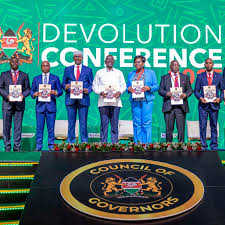
When Kenya adopted the 2010 Constitution, devolution was hailed as a transformative promise—bringing services closer to the people, enhancing accountability, and correcting decades of centralized marginalization. At the heart of this new system were two county institutions: the County Executive and the County Assembly. While governors and county executives often dominate public discourse, County Assemblies (CAs) were envisioned as the people’s watchdogs—legislative bodies tasked with lawmaking, oversight, and representation.
More than a decade later, however, a critical question persists: Have County Assemblies become the weakest link in Kenya’s devolution framework?
The Constitutional Mandate: Strong on Paper
County Assemblies are constitutionally mandated to:
-
Legislate on county-specific matters
-
Exercise oversight over county executives
-
Represent the interests of the people
In theory, this places Members of County Assembly (MCAs) at the center of accountability. They approve budgets, vet executive appointees, and scrutinize county spending. If fully empowered and ethically grounded, County Assemblies should be formidable institutions safeguarding public resources and democratic governance.
Yet the reality on the ground often tells a different story.
Oversight in Name, Not in Practice
One of the most persistent criticisms of County Assemblies is their weak oversight role. Numerous Auditor-General reports reveal recurring patterns of financial mismanagement, unsupported expenditures, and procurement irregularities—many of which pass through County Assemblies with minimal resistance.
In several counties, MCAs are accused of:
-
Trading oversight for allowances and favors
-
Colluding with executives instead of holding them accountable
-
Using impeachment threats as bargaining tools, rather than accountability mechanisms
Rather than acting as independent watchdogs, some assemblies have devolved into extensions of the executive arm, undermining the very checks and balances devolution sought to create.
Capacity Gaps and Questionable Priorities
Another challenge lies in capacity and competence. While the Constitution sets minimum academic qualifications for MCAs, effective legislation and oversight require continuous training, policy literacy, and technical support. Many assemblies struggle with:
-
Limited understanding of budgets and public finance
-
Poorly drafted motions and bills
-
Overreliance on executive-controlled information
At the same time, public perception is shaped by frequent headlines about:
-
Excessive travel and sitting allowances
-
Endless motions on renaming roads or impeaching speakers
-
Minimal engagement with real community priorities
This disconnect fuels the narrative that County Assemblies are more focused on personal gain than public service.
Representation Without Participation?
County Assemblies are supposed to be the closest democratic institutions to the people. Ironically, public participation—one of devolution’s core principles—is often reduced to a box-ticking exercise. Budget hearings are poorly advertised, feedback is rarely incorporated, and citizens feel alienated from decision-making processes.
When representation lacks meaningful participation, assemblies lose legitimacy, becoming vulnerable to elite capture and political manipulation.
Political Patronage and Party Control
Political parties play a significant role in weakening County Assemblies. MCAs frequently operate under intense party pressure, prioritizing loyalty over constituency interests. Independent thought can be punished through party discipline, committee removals, or denial of opportunities.
This environment discourages bold oversight and reinforces conformity—especially when governors wield significant influence over local party structures.
Are County Assemblies Entirely to Blame?
While criticism is warranted, it is important to acknowledge structural constraints:
-
Limited financial autonomy
-
Delayed disbursement of funds
-
Weak institutional support systems
-
Public hostility that overlooks success stories
Some County Assemblies have passed progressive laws, strengthened public participation, and exposed corruption. However, these successes are often overshadowed by widespread underperformance.
Strengthening the Weakest Link
If devolution is to deliver its promise, County Assemblies must be reformed and strengthened, not written off. Key interventions include:
-
Continuous capacity building for MCAs
-
Stronger enforcement of ethical standards
-
Enhanced public participation mechanisms
-
Institutional independence from county executives
-
Civic education to empower citizens to demand accountability
Conclusion
County Assemblies were designed to be the backbone of devolved governance. Instead, they risk becoming its Achilles’ heel. Whether they remain the weakest link—or emerge as champions of accountability—depends on political will, institutional reforms, and an informed citizenry willing to reclaim devolution from complacency and self-interest.
Devolution can only be as strong as its oversight institutions. And at the county level, the spotlight must remain firmly on the assemblies—not just to criticize, but to transform them into what the Constitution envisioned: true voices of the people.