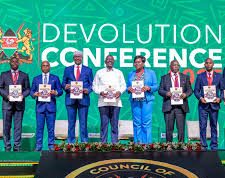






When Kenya adopted the 2010 Constitution, devolution was one of its most transformative promises. By creating 47 county governments, the Constitution sought to reverse decades of over-centralization, bring services closer to the people, promote equitable development, deepen democracy, and enhance accountability. More than a decade later, the question remains: has devolution delivered on what the Constitution promised?
What the Constitution Promised
Devolution was anchored on clear constitutional objectives (Article 174), including:
-
Self-governance and public participation: empowering citizens to manage their own affairs.
-
Equitable sharing of national and local resources: correcting historical marginalization.
-
Efficient and accessible service delivery: taking government closer to the people.
-
Checks on centralized power: dispersing authority to prevent abuse.
-
Protection of minorities and marginalized communities.
These promises set a high bar—both politically and economically.
Where Devolution Has Delivered
1. Improved Access to Services
In many parts of the country, devolution has undeniably brought services closer to citizens. Health facilities have increased, especially at Levels 2 and 3; dispensaries and health centers now exist in areas previously underserved. County roads, markets, early childhood education centers (ECDEs), and water projects have expanded rapidly. For millions of Kenyans, government is no longer a distant Nairobi institution.
2. More Equitable Resource Distribution
Before 2010, public investment was heavily skewed toward a few regions. Through the equitable share and affirmative allocations, historically marginalized counties—such as Turkana, Mandera, Marsabit, and West Pokot—have received unprecedented levels of funding. While challenges remain, devolution has reduced regional disparities that were once entrenched.
3. Local Economic Stimulation
County spending has stimulated local economies. Construction, local procurement, and county employment have injected money into rural and peri-urban areas, creating jobs and supporting small businesses. In this sense, devolution has functioned as an economic decentralization tool.
4. Political Inclusion and Visibility
Devolution has opened political space. Governors, county assemblies, and local leadership structures have given communities a stronger voice in governance. Citizens now have identifiable leaders responsible for local development, enhancing political awareness and engagement.
Where Devolution Has Fallen Short
1. Corruption and Weak Accountability
One of the greatest disappointments has been the replication of corruption at the county level. While devolution was meant to enhance accountability, weak oversight, compromised assemblies, and limited civic vigilance have allowed misuse of public funds in many counties. In some cases, devolution decentralized not just power—but also corruption.
2. Capacity Gaps and Inefficiency
Many counties struggled—and still struggle—with technical capacity, planning, and financial management. Poor project prioritization, stalled developments, and inflated costs have undermined efficiency. The promise of better service delivery has been uneven, depending largely on leadership quality.
3. Tensions Between National and County Governments
Frequent conflicts over functions, funding delays, and conditional grants have constrained county performance. Health sector disputes, in particular, have exposed ambiguities in intergovernmental relations, affecting service delivery and staff morale.
4. Public Participation: Promise vs Practice
Although public participation is constitutionally mandated, in practice it is often tokenistic. Budget hearings are poorly attended or inadequately facilitated, and citizen input is frequently ignored. This undermines the very spirit of people-centered governance that devolution was meant to foster.
The Verdict: Partial Success, Unfinished Business
So, has devolution delivered what the Constitution promised? The honest answer is partially.
Devolution has changed Kenya irreversibly—bringing government closer to the people, redistributing resources, and expanding local development. These gains are real and should not be understated. However, devolution has not automatically translated into good governance. Structural weaknesses, leadership failures, corruption, and limited citizen oversight have diluted its transformative potential.
What Needs to Happen Next
For devolution to fully deliver on its constitutional promise:
-
Strengthen accountability mechanisms at county level, including independent oversight and empowered county assemblies.
-
Build technical and institutional capacity in planning, procurement, and service delivery.
-
Deepen meaningful public participation, moving beyond box-ticking exercises.
-
Clarify and respect intergovernmental roles, with timely and predictable funding.
-
Promote ethical, visionary leadership, because devolution is only as good as the leaders who run it.
Conclusion
Devolution was never meant to be a miracle cure; it was a framework. The Constitution provided the structure, but delivery depends on institutions, leadership, and citizens. Devolution has opened the door to inclusive development and democratic governance—but walking through that door remains Kenya’s collective responsibility.
The promise is still alive. The challenge is whether Kenyans will demand—and defend—the devolution they voted for.